Busyness as Survival | Inner Reunion
Emotional Health, Self-Reflection
Busyness as Survival
For much of my life, I thought being busy was simply part of my personality.
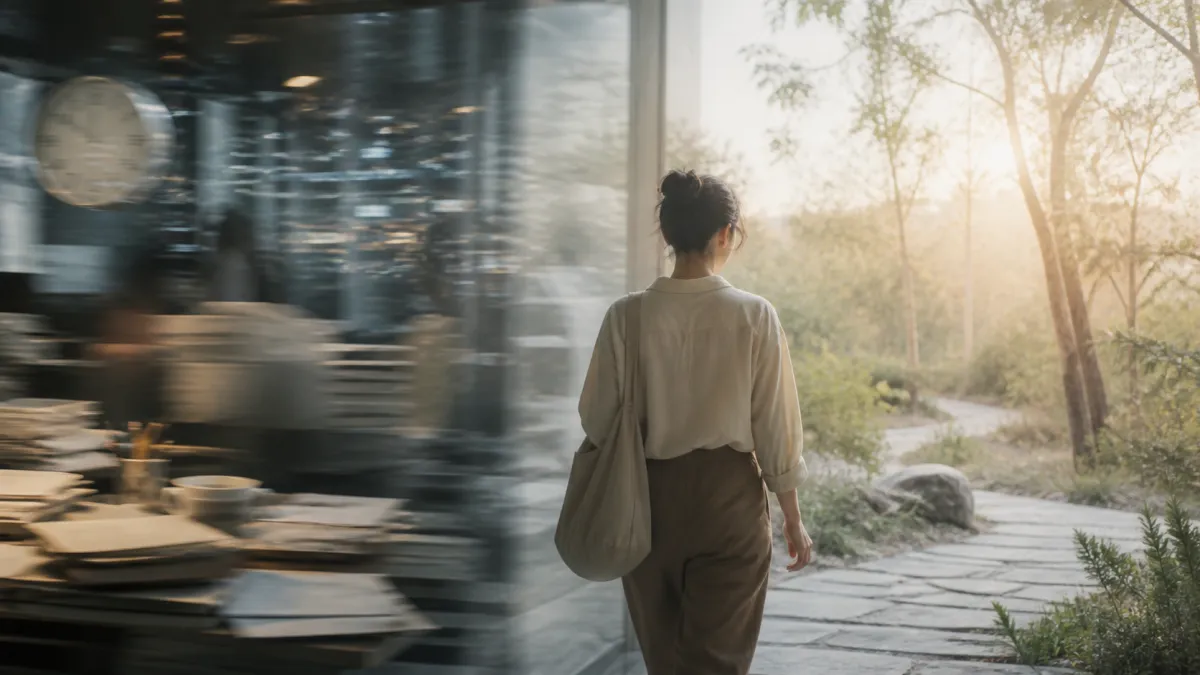
I was always doing something, usually twenty million things at once. I ran, exercised, listened to music, made plans and filled every available space. People regularly commented on how busy I was, and I often wore it as a badge of honour.
Recently, while listening to someone speak about survival mode, something clicked.
My constant movement wasn’t always just enthusiasm, ambition or a naturally energetic personality. Sometimes, busyness was a way of running from my emotions.
And perhaps the part of me that kept me busy wasn’t trying to make my life difficult. Perhaps it was trying to protect me.
When staying busy keeps us safe
My emotions felt incredibly intense when I was a child. I didn’t yet know how to understand them, regulate them or allow them to move through me. At times, they simply felt like too much.
So I learned to escape.
Sometimes, I did that quite literally by going for a run. At other times, I stayed busy or lost myself in music. I found anything that could absorb my attention and take me away from what I was feeling.
Looking at this through the lens of Integrated Self Dynamics, I can recognise busyness as something a protective part of me may have used to help me cope.
Our protective parts can develop in response to experiences we weren’t equipped to process at the time. They adopt roles and strategies designed to keep us away from pain, vulnerability or emotional overwhelm.
For me, that strategy was movement.
Keep running. Keep doing. Keep your mind occupied. Don’t stop long enough for the feelings to catch up.
This wasn’t a conscious decision. It was a form of protection.

When avoidance looks normal
As I got older, drinking became another way to disconnect.
My drinking was never something I would have described as horrendous. It seemed much the same as everyone else’s, particularly when we first started drinking in our youth.
But perhaps the amount wasn’t the most important part. What mattered was the purpose it served for me.
Amid the turmoil happening around me, alcohol helped me avoid what I was feeling. It softened things and temporarily gave me somewhere else to go.
Because the behaviour appeared socially normal, it was easy to overlook what was happening underneath it. I wasn’t simply drinking because everyone else was. A protective part of me had recognised another way to create distance from difficult emotions.
This is one of the complicated things about avoidance: it doesn’t always look obviously destructive. Sometimes it looks ordinary. Sometimes it is socially encouraged. Sometimes it even looks healthy.
Hiding inside healthy habits
Later, exercise became what I thought was a healthier replacement.
And in many ways, it was. Exercise can support our physical health, improve our mood and help emotions move through the body.
But I could also use it to lose myself.
I could focus on movement, achievement and doing rather than being with myself. The behaviour had changed, but the protective intention beneath it was sometimes the same.
Keep moving.
Don’t slow down.
Don’t feel.
Even my resistance to yoga makes more sense to me now. I used to think, Ugh, it’s too slow.
Perhaps slowness felt uncomfortable because it left me with nowhere to hide. When the movement stopped and everything became quiet, my emotions could finally catch up with me.
A behaviour can be healthy in itself and still be used as a form of avoidance. Exercise can bring us into our bodies, or it can help us run from them. Personal development can help us know ourselves, or it can become another endless project of trying to fix ourselves. Helping others can come from genuine care, or it can prevent us from attending to our own needs.
The activity doesn’t always reveal what is really happening.
We need to become curious about the energy underneath it.
Protective parts are not the enemy
It would be easy to look back and judge the ways I coped.
But protective parts don’t arrive to sabotage us. They develop because, at some point, their strategies helped us survive something we didn’t yet know how to hold.
The part that kept me busy was trying to stop me from becoming overwhelmed. The part that encouraged me to run, drink, exercise or disappear into music was attempting to carry me away from feelings that once seemed unbearable.
Those strategies served a purpose.
The difficulty comes when a protective part continues performing an old role even though our circumstances have changed. What once offered safety can become an automatic pattern that disconnects us from ourselves.
Healing isn’t about rejecting or fighting that part. It is about turning towards it with curiosity.
What are you afraid would happen if I stopped?
What are you protecting me from?
What do you need me to know?
We can appreciate how a protective part helped us while gently showing it that we now have more choices, support and capacity than we once did.
When society rewards our protective patterns
Busyness can be particularly difficult to recognise because society often rewards it.
We tend to associate full calendars, productivity and constant activity with ambition and success. We admire people who are always working, achieving, helping and producing. Rest can be treated as laziness, while exhaustion becomes evidence that someone is trying hard enough.
Someone can look successful, disciplined and highly capable while internally feeling disconnected, anxious or terrified of stopping.
Our protective patterns may even receive praise:
I don’t know how you do it all.
You’re always so productive.
You never stop.
What others see as drive may sometimes be a nervous system that doesn’t feel safe enough to rest.
This invites a deeper question: who are we when we are not achieving, producing, helping or being useful?
If we have learned to connect our worth with what we accomplish, stillness can feel threatening. Rest is no longer simply rest. It becomes a space in which uncomfortable feelings, or questions about our identity and worth can emerge.
Not every full life is avoidance
None of this means that being active, ambitious or interested in many things is inherently unhealthy.
I still love doing many things. I’m curious, energetic and multi-passionate. As a Manifesting Generator, following different interests and pursuing what excites me feels like an authentic part of my nature.
I don’t need to make myself smaller, slower or less enthusiastic to prove that I have healed.
The difference is the energy beneath the activity.
Busyness driven by survival can feel urgent and compulsive. It says, Don’t stop.
Activity driven by joy feels chosen, expansive and alive. It says, I want to explore this.
From the outside, those two experiences may look almost identical. On the inside, they feel completely different.
I can begin to notice that difference by asking:
Am I moving towards something that lights me up, or away from something I don’t want to feel?
What happens inside me when I have nothing to do?
Is there an area of my life where I rarely take time to be with myself?
Does this activity help me connect with myself or disappear from myself?
What feelings tend to surface when I slow down?
Do I feel guilty, restless or unworthy when I rest?
Does this feel like a genuine choice, or does it feel as though I cannot stop?
Is a protective part of me using busyness to create safety?
What might that part be afraid would happen if I became still?
What would nourishing, emotionally safe rest look like for me?
We don’t need to force immediate answers. Simply noticing our reactions to these questions can tell us something.

Moving towards myself
I am learning that my emotions can be intense without being dangerous. I don’t always have to distract myself, fix something or turn every feeling into action.
Sometimes, I can simply stay.
I can acknowledge the protective part that wants to keep moving and let it know that I understand why it is there. I can thank it for the ways it tried to help me survive. And I can begin to show it that slowing down no longer has to mean being overwhelmed and alone.
I still run. I still exercise. I still become absorbed in music, follow multiple interests and fill my life with things that excite me.
But more and more, these choices come from a different place.
I’m not doing all the things to avoid myself.
I’m doing the things that genuinely light me up.
Perhaps healing doesn’t mean becoming someone who is never busy. Perhaps it means no longer needing busyness to feel safe.
The outside of my life may not look dramatically different. I may still be the person doing twenty million things.
But on the inside, something has changed.
I’m no longer always running away from myself.
I’m learning to listen to the parts that once needed me to run and, gently, to move towards myself.
